Quick Answer: Craft preschool activities do not need a stocked art cupboard to work. The best ones use everyday items already at home, tape, paper plates, clothespins, cotton, and still build fine motor strength, focus, and creative confidence, without the cleanup dread that keeps many parents from crafting at all.
- No-mess crafts use dry materials: tape, paper, clothespins, pipe cleaners
- Best craft length for a preschooler: 15 to 20 minutes
- Top skill built through crafting: fine motor control and hand-eye coordination
- Easiest starter craft: paper plate art or bead threading
- Festival crafts double as cultural learning: Diwali diyas, Rakhi bands, Holi thumbprint art
- Process matters more than the finished product at this age
Introduction
Somewhere in most homes with a preschooler sits an art supply box, bought with the best intentions, opened maybe twice. The idea of crafting sounds lovely right up until the paint bottle tips over or the glitter finds its way into the sofa cushions for the next six months. So the box gets pushed to the back of a shelf, and craft time quietly disappears from the week.
The good news is that almost none of that mess was ever necessary. A properly run preschool craft session runs on tape, paper, clothespins, and a bit of imagination, not a fully stocked art cupboard. And the payoff is real. Repeated fine motor practice during the preschool years, tasks like threading, tearing, pinching, and gripping, strengthens the same neural pathways a child will later rely on for writing, buttoning a shirt, and holding cutlery, a connection well documented by early brain development research from institutions like the Harvard Center on the Developing Child.
This guide sorts 25 tried-and-tested craft ideas into three practical categories, easy no-mess options for home, slightly more involved classroom-style projects, and festival crafts that give a child a hands-on connection to Indian traditions. None of them require a shopping trip.
Why Craft Activities Boost Preschool Learning
Craft activities matter because they force a child’s hands and brain to work together in ways that screens and passive toys simply cannot replicate. Every fold, tear, squeeze, and thread strengthens fine motor control, while every open-ended project, “make whatever this becomes,” builds the kind of creative decision-making that later shows up in problem-solving and independent thinking.
This is also where joy quietly does the heavy lifting. A child engrossed in decorating a paper plate is not thinking about skill-building at all, and that is precisely why the skill sticks. This mirrors the thinking behind Welmont’s Happiness Quotient approach, the idea that genuine engagement, not compliance, is what makes early learning last. A craft a child actually wants to keep making outperforms one assigned as a task every time.
Craft Activities at a Glance
| Setting | Best For | Typical Supplies | Time Needed |
| Home, No-Mess | Quick weekday afternoons | Tape, paper, clothespins | 10-15 minutes |
| Classroom-Style | Group sessions with guided steps | Paint, pasta, popsicle sticks | 15-20 minutes |
| Festival & Seasonal | Cultural connection and family bonding | Clay, yarn, natural materials | 20-25 minutes |
10 No-Mess Craft Ideas for Home
A genuinely no-mess craft skips wet paint and liquid glue in favor of dry materials, tape, paper, clips, string, so cleanup takes under five minutes and the dining table survives intact.
- Ziploc Bag Painting: Paint sealed inside a plastic bag, taped to a window, lets a child squish and blend colors with zero spill risk. Builds color recognition and gentle finger pressure control.
- Tie-Dye Coffee Filters: A few drops of water on marker-drawn designs spreads the ink into soft patterns. Builds an early sense of cause and effect.
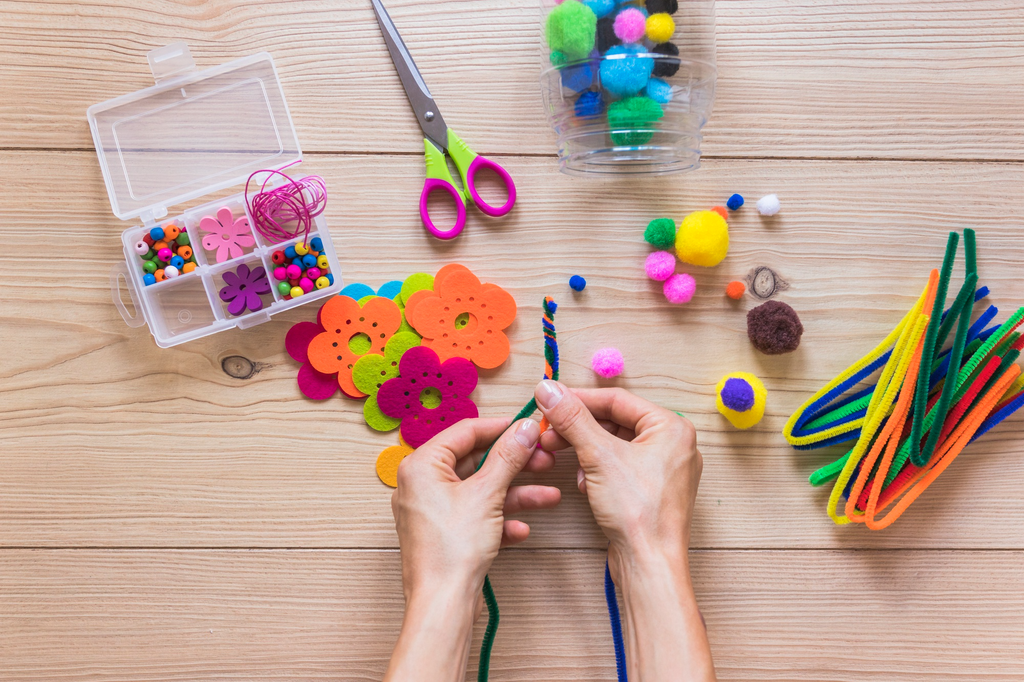
- Pipe Cleaner Bracelets: Threading beads onto fuzzy pipe cleaners makes an instant wearable. Strengthens pincer grip and hand-eye coordination.
- DIY Cardboard Puzzles: A simple drawing on cardboard, cut into a few large chunks, becomes a reassembly challenge. Builds spatial reasoning and patience.
- Nature Stick Painting: Sturdy twigs collected outside get wrapped in yarn or dabbed with paint. Connects outdoor exploration with fine motor practice.
- Paper Plate Animals: Crayons and paper scraps turn a plain plate into a sunflower, a mask, or a spaceship. Builds imaginative storytelling alongside cutting and coloring skills.
- Cardboard Tube Monsters: Empty rolls transform into characters with stickers, markers, and googly eyes. Encourages creative decision-making with no “correct” outcome.
- Magic White Crayon Watercolor: A hidden white crayon drawing appears only once watercolor is brushed over it. Builds anticipation, focus, and an early lesson in cause and effect.
- Washi Tape Paper Plates: Sticking colorful tape in patterns onto a paper plate teaches color grouping while strengthening grip and precision.
- Toilet Paper Roll Binoculars: Two rolls taped together and decorated turn into a pretend-play favorite. Builds hand-eye coordination and early language as children narrate what they “spot.”
10 Classroom-Style Craft Projects
Classroom settings can absorb slightly more setup since a teacher manages materials for a group, but the best sessions still stay under 20 minutes of active work to match a preschooler’s attention span.
- DIY Stamps: Foam glued to bottle caps or corks creates simple stamps for pattern-making. Builds repetition-based fine motor control.
- Clothespin Dragonflies: Painting, gluing, and attaching pipe cleaner wings sharpens hand-eye coordination through a multi-step process.
- Painted Pasta Necklace: Threading dry pasta onto string after a quick paint session builds patience and fine motor sequencing.
- Popsicle Stick Kitty: Drawing, coloring, and simple scissor work make this a solid scissor-skills builder for slightly older preschoolers.
- Leaf Prints: Paint-dipped leaves pressed onto paper create a nature collage while reinforcing an understanding of shape and symmetry.
- Craft Stick Snakes: Coloring a wooden stick and adding googly eyes introduces early animal-kingdom vocabulary alongside fine motor practice.
- Handprint Sunflower: Traced handprints glued around a center circle build a flower shape while reinforcing body awareness and shape recognition.
- Sponge Painting: A clothespin-clipped sponge makes painting manageable for children who are not yet confident with a brush, easing color-mixing exploration.
- Little Pebble Monsters: Painted stones with dot eyes open up a natural conversation about emotions and expressions, quietly building emotional vocabulary.
- Can Binoculars: An upgrade from the toilet roll version, stapling and decorating cans strengthens hand-eye coordination and supports pretend-play language.
Group sessions like these also tend to be where a child’s very first real experience of cooperative crafting happens, sharing supplies, waiting a turn, admiring a neighbor’s version, the exact groundwork explored in more depth in the benefits of hobbies for kids.
5 Festival & Seasonal Craft Ideas for Indian Preschoolers
Festival crafts do double duty. Alongside the usual fine motor benefits, they give a child an early, tactile connection to cultural traditions and the everyday values often called Sanskars, patience, gratitude, and a sense of belonging to something shared.
- Diwali Diya Painting: Clay diyas or upcycled bottle caps decorated with dots and simple patterns introduce the festival’s meaning through hands-on color work.
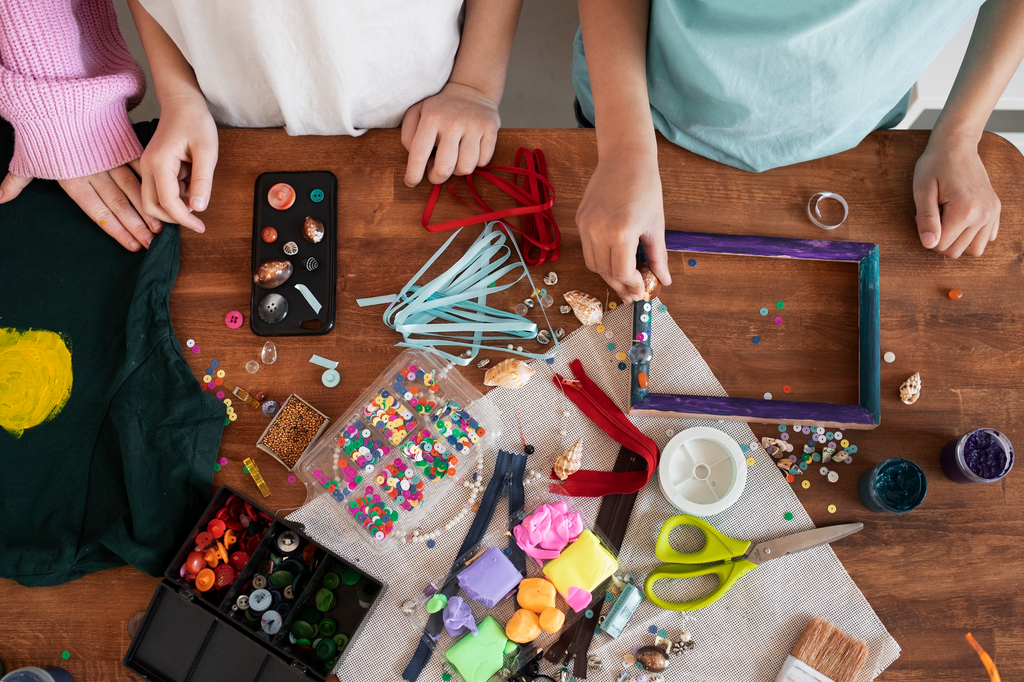
- Rakhi Making with Yarn and Beads: Threading beads onto yarn to create a wearable band builds fine motor skill while opening a natural conversation about sibling bonds.
- Holi Thumbprint Flower Art: Dabbing colored thumbprints into flower shapes turns festival colors into a controlled, low-mess sensory activity.
- Independence Day Tricolor Handprint Flag: Handprints in saffron, white, and green arranged into a flag shape combine color learning with an early sense of national identity.
- Monsoon Nature Collage: Leaves and twigs gathered on a short walk get arranged and glued onto paper, tying outdoor exploration to the rainy season itself.
Parent-Friendly Supplies Checklist
Nearly every craft in this guide runs on a small, reusable home stash rather than a fresh shopping trip each time.
- The Reusable Basics: Paper plates, clothespins, pipe cleaners, cardboard tubes, coffee filters, tape, yarn, googly eyes.
- What to Skip on No-Mess Days: Wet paint that needs drying time, liquid glue, glitter, or anything requiring more than five minutes of setup before a child can start.
How Welmont Integrates Art & Craft into the Curriculum
Inside a Welmont classroom, craft is never a standalone filler activity between “real” lessons. It rotates through what is known internally as the Monthly Virtuous Circle, where a single month’s theme connects craft, sensory play, language, and social-emotional goals into one coherent thread.
During a nature-themed week, for instance, a short outdoor walk to collect leaves and twigs might feed directly into a collage session, which then becomes the centerpiece of a related storytelling circle later the same day. The craft is never separate from the learning around it, it is one thread in a larger, deliberately woven week.
This is also where the Happiness Quotient shows up in practice. A child fully absorbed in gluing leaves onto paper is building shape recognition, patience, and fine motor control without ever feeling like it is “work.” That overlap, joy and skill-building happening at once, is the entire design principle behind how Welmont structures its Play Group, Nursery, and Daycare programs.
The Real Takeaway on Craft Time
None of this requires reorganizing a home around art supplies or setting aside an entire Saturday for a “proper” project. A single clothespin, a stray paper plate, and fifteen unhurried minutes are usually enough. What matters far more than variety is repetition, letting a child return to a favorite craft again and again until the skill underneath it, gripping, threading, cutting, truly settles in.
For families curious what this kind of low-prep, high-value crafting looks like when it is woven into an entire school day rather than squeezed in at home, a visit tends to make the picture far clearer than any list. Booking a school tour at Welmont Preschool & Daycare offers a firsthand look at a live craft session inside the Monthly Virtuous Circle, and a chance to see exactly which activities would suit a specific child right now.
Let creativity be part of every school day. Visit Welmont School and see how purposeful craft activities turn everyday moments into meaningful learning. Book a school tour today!
Frequently Asked Questions
1. What are good no-mess craft activities for preschoolers?
Ziploc bag painting, pipe cleaner bracelets, and paper plate animals are strong no-mess options since they rely on dry materials and sealed containers rather than wet paint or liquid glue, keeping cleanup under five minutes.
2. How long should a preschool craft activity take?
Most preschool craft sessions work best between 15 and 20 minutes, matching a young child’s natural attention span. Shorter, more frequent craft sessions tend to hold engagement better than one long project.
3. What supplies should every parent keep on hand for preschool crafts?
A small reusable stash of paper plates, clothespins, pipe cleaners, cardboard tubes, tape, and yarn covers the majority of no-mess craft ideas without requiring a dedicated shopping trip for each activity.
4. Are festival crafts good for preschoolers?
Yes, festival crafts like Diwali diya painting or Rakhi making build the same fine motor skills as any other craft while also giving a child an early, hands-on connection to cultural traditions and family celebrations.
5. Do preschool crafts need to look neat or “correct”?
No, preschool crafts should never be judged by the finished product. The real value lies in the process, exploring materials, making decisions, and practicing new hand movements, not in how closely the result resembles the original idea.