At a Glance
Choosing a safe daycare means going beyond brochures and asking direct questions about licensing, staff to child ratios, sanitation routines, physical security, and emergency preparedness. A genuinely safe daycare answers these questions clearly and confidently, without hesitation or vague reassurances.
Quick answers parents are usually searching for:
- Ask about licensing, staff qualifications, and background checks first
- Confirm staff to child ratios, lower ratios mean closer, safer supervision
- Check sanitation routines: toy cleaning, handwashing, food handling, sick child policy
- Verify physical security: CCTV coverage, entry access control, pickup verification
- Ask how medical emergencies, allergies, and evacuation drills are actually handled
The Question Every Parent Is Quietly Asking
There is a very specific feeling that shows up on a daycare tour. The classroom looks warm. The walls are covered in finger paintings. Someone is smiling and describing the “nurturing environment” for the third time. And underneath all of it, a small, persistent voice keeps asking the same thing. Is this actually safe?
Most parents don’t say that question out loud. It feels a little awkward, almost like doubting someone’s hospitality mid tour. But it is one of the most important questions a parent will ever ask, and it deserves a much clearer answer than a warm smile and a nicely decorated hallway.
Here is something worth knowing before that tour even happens. The environments a child spends time in during their first years don’t just shape what they learn, they shape how safe the world feels to them at a fundamental level. Early childhood researchers, including UNICEF, have long pointed to this: a child’s earliest surroundings actively influence brain development, not only academically but emotionally, in how secure and cared for a child learns to feel in the world. A daycare is not simply a place a child gets dropped off. It is one of the environments doing that shaping, every single day, which is exactly why safety and hygiene deserve more than a passing glance during a walkthrough.
What follows is a clear, organized set of 15 real questions, the kind that reveal how a daycare actually runs on an ordinary Tuesday, not what its website promises.
What Daycare Safety Actually Means, Beyond a Locked Gate
Real daycare safety isn’t a single feature. It is four connected layers working together: who is caring for the child, how clean and hygienic the environment stays, how physically secure the space is, and how prepared the staff are when something genuinely goes wrong.
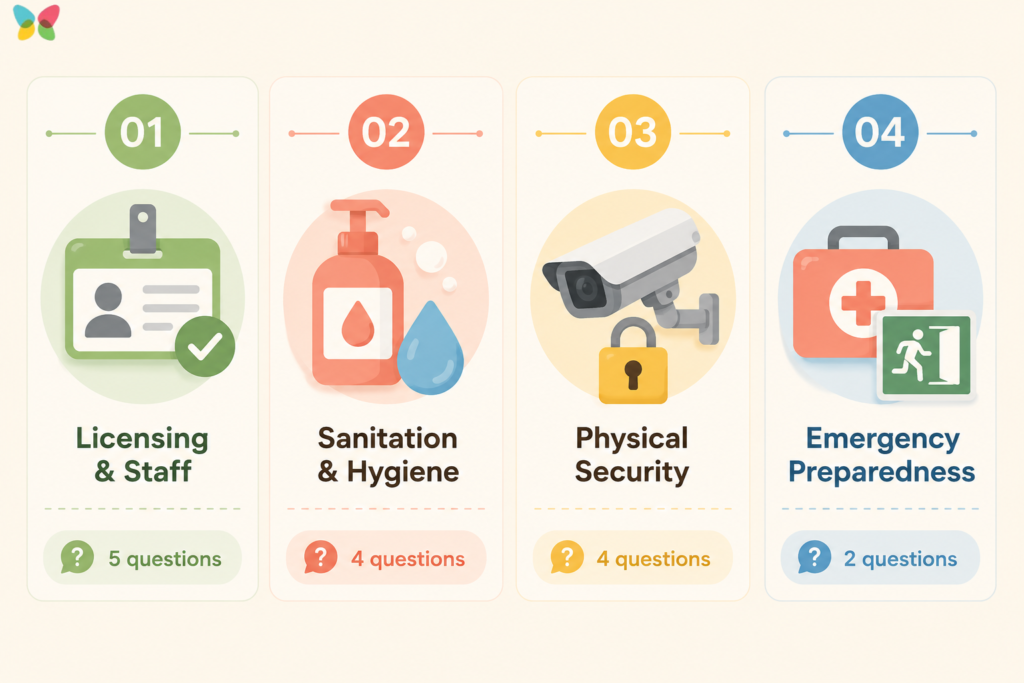
A five minute walkthrough rarely reveals any of this. A tour’s warmth, the decor, the friendly greeting at the door, none of it says much about what happens on a hard day, when a child gets hurt, or when illness starts spreading through a classroom. That is exactly what the questions below are designed to uncover.
Licensing and Staff Questions Worth Asking
Staff quality is the single biggest predictor of how a daycare actually handles both routine days and real emergencies. Everything else matters, but this matters most.
1. Is the facility fully licensed and compliant with local regulations? This confirms the daycare meets baseline government safety and child care standards, not just its own internal claims.
2. What is the staff to child ratio, and how does it compare to recommended benchmarks? Lower ratios mean closer supervision and fewer chances for a child to go unnoticed, even briefly. Recommended benchmarks generally sit around one caregiver for every four infants, one for every six toddlers, and one for every ten preschool aged children.
3. Are all staff background checked before they’re allowed near children? This should include full verification, not a partial or informal check.
4. Are caregivers trained and certified in pediatric first aid and CPR? Active certification matters here, not a course completed years ago and never renewed.
5. How long have teachers and the director actually been there? Staff stability tends to matter far more than parents initially expect. Consistent caregivers build real trust with a child over time, and that trust reduces daily anxiety in a way that no amount of classroom decor ever could.
Sanitation and Hygiene Questions Worth Asking
Hygiene routines quietly determine whether a classroom becomes a place where illness spreads easily, or a place where children generally stay well.
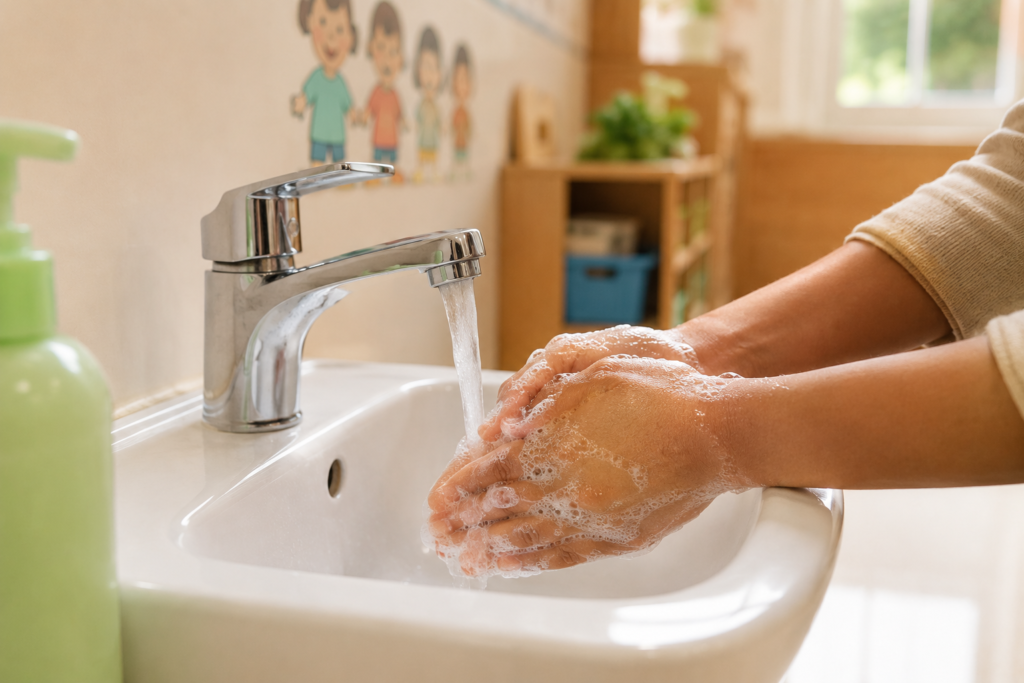
6. How often are toys, surfaces, and high touch areas sanitized? High quality centers disinfect shared surfaces multiple times throughout the day, not just once at closing time.
7. What is the sick child policy, and what symptoms require staying home? A clear, specific answer here, including how long a child must be symptom free before returning, is a strong sign of a well run facility.
8. What are the handwashing routines for both children and staff? This should cover handwashing before meals, after outdoor play, and after any diaper changes, consistently, not occasionally.
9. How are diapering and food preparation areas kept separate? These spaces should be fully separated, with no overlap between where diapers are changed and where meals are prepared.
Physical Security Questions Worth Asking
Physical security tends to be the layer parents worry about most, and thankfully, it is also the layer that is easiest to verify directly during a visit.
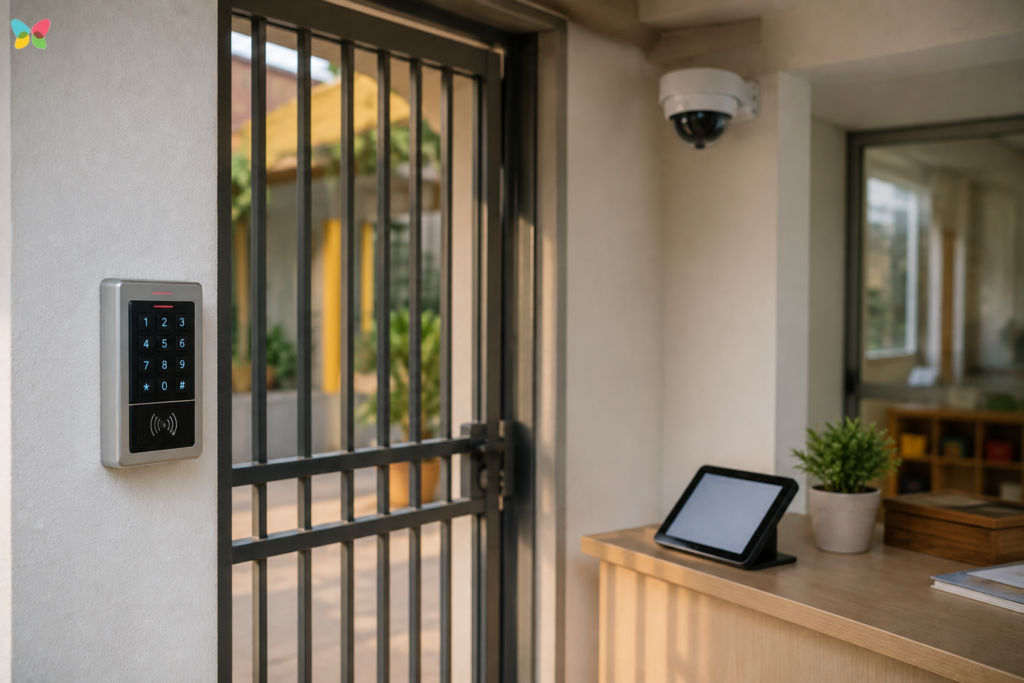
10. Are entry points secured with controlled access, not just an open door? Look for keypad locks, keycard systems, or a staffed reception point that actually monitors who comes and goes.
11. Is CCTV in place, and can parents access footage if needed? Coverage should extend across play spaces and entry points, not just the front lobby.
12. How is the space childproofed? This includes covered outlets, padded corners, secure gates, and hazardous materials stored well out of a child’s reach.
13. What is the exact process for verifying who is authorized to pick up a child? There should be a real verification process here, checked identity, not a casual glance and a wave.
Emergency Preparedness Questions Worth Asking
How a daycare handles a genuinely bad day, an injury, an allergic reaction, an actual fire drill, tells a parent far more than how it handles a good one.
14. What is the actual protocol for medical emergencies, and how are parents notified? This should include a clear injury log, an immediate notification process, and a defined evacuation plan if needed.
15. How are severe allergies managed, and are evacuation drills practiced regularly? Ask specifically whether drills happen on a real schedule, not just exist as a document filed away somewhere.
How to Read the Answers, Not Just Collect Them
Here is something worth remembering once the questions are asked. It is not just what a daycare says in response, it is how they say it. A vague, rehearsed sounding answer, something close to “oh yes, we’re very safe,” without any specifics, is worth paying attention to. A confident, detailed answer, one that sounds practiced because it is genuinely lived daily, tends to reflect a daycare that actually does what it describes.
It also helps enormously to simply watch staff interact with children during the visit itself. The way a teacher responds to a child mid meltdown often reveals more truth than any answer given verbally ever could.
Why Welmont Is Built to Answer Every One of These Questions Confidently
Every question above forms a genuinely useful checklist, and it happens to describe closely what Welmont’s approach to safety has been built around from the ground up.
Safety and Hygiene as Standard Practice, Not a Selling Point
CCTV monitored campuses that have access to parents, controlled entry systems, verified pickup procedures, and trained, background checked staff aren’t treated as bonus features at Welmont. They’re simply the baseline every classroom operates on. Anyone curious can see exactly how these standards come together on the facilities and safety page.
The Monthly Virtuous Circle and Everyday Emotional Safety
Beyond the physical layer, safety at Welmont also means a child’s comfort and readiness are checked continuously, not simply assumed the day enrollment paperwork is signed. This is where the Monthly Virtuous Circle comes in, a personalized pacing approach that keeps a close eye on how each individual child is actually settling in, month by month.
The Happiness Quotient as a Safety Principle, Not Just a Learning One
There is a quieter kind of safety too, the kind that comes from a child never feeling lost in a crowd. What Welmont calls the Happiness Quotient reflects exactly this: a child who feels emotionally secure is also a child being watched closely, known individually, and genuinely seen by the adults around them each day.
Sanskars and the Culture of Care Behind the Protocols
Respect and attentiveness aren’t limited to how staff speak to children, they extend into how seriously safety itself gets treated as part of Welmont’s everyday culture, rooted in the same Sanskars values, courtesy, gratitude, and respect, that shape every classroom interaction. Families exploring what a Welmont campus actually looks like day to day can browse the learning center facilities or the full facilities overview for a closer look.
The Final Word
Asking these 15 questions isn’t about being a difficult parent or doubting anyone’s good intentions. It is simply due diligence for one of the most important decisions a family makes, and the confidence behind a daycare’s answers usually tells a parent far more than any brochure or lobby display ever will.
The best way to know if a daycare genuinely takes safety seriously is to ask these questions directly and pay close attention to how confidently they’re answered. Families are always welcome to visit a Welmont campus, ask every one of these questions in person, and see the safety practices in action for themselves.
Frequently Asked Questions
1. What questions should I ask about daycare safety before enrolling my child?
Ask about licensing and staff background checks, staff to child ratios, sanitation and handwashing routines, physical security like CCTV and controlled entry, and how medical emergencies and evacuations are handled.
2. What is a good staff to child ratio at a daycare?
Recommended benchmarks are generally around one teacher for every four infants, one for every six toddlers, and one for every ten preschool aged children, though exact ratios can vary by location and regulation.
3. How often should a daycare sanitize toys and classrooms?
A high quality daycare typically disinfects high touch surfaces, toys, and shared equipment multiple times a day, not just at the end of the day.
4. How can parents verify a daycare’s safety claims during a tour?
Ask direct questions and observe staff child interactions in person, request documentation of safety protocols, and pay attention to whether answers sound specific and confident rather than vague or rehearsed.
5. Does Welmont follow strict safety and hygiene protocols in its daycare program?
Yes, Welmont’s daycare program is built around CCTV monitored campuses, controlled entry and verified pickup procedures, trained staff, and consistent hygiene routines as standard practice, not an add on feature.