Quick Answer: Fine motor skills activities preschool teachers rely on to target the small muscles in hands and fingers, while gross motor activities build the large muscles used for balance and coordination. A child needs both, in daily doses, to be genuinely ready for the physical demands of a formal classroom.
- Fine motor skills control fingers and hands: writing, buttoning, cutting
- Gross motor skills control the whole body: balance, running, climbing
- Best daily fine motor practice: 15 to 20 minutes, hands-on
- Best daily gross motor practice: 45 to 60 minutes of active play
- Simple starter fine motor activity: sticker peeling or playdough rolling
- Simple starter gross motor activity: animal walks or an obstacle course
Introduction
A four-year-old sits at a table, crayon gripped in a fist instead of between the fingers, pressing so hard the paper nearly tears. A few feet away, the same child hesitates at the bottom of two small steps, one hand glued to the railing. Neither moment is a red flag. Both are simply signs of a skill that hasn’t had enough practice yet.
Motor skill development is not something most children arrive at on a fixed timeline, no matter what a milestone chart implies. It is built, day by day, through the exact kind of repetitive, hands-and-body-busy play that fills a good preschool classroom. Research compiled by the Harvard Center on the Developing Child consistently links early motor skill practice to smoother transitions into formal schooling, since a child who can sit steadily, hold a pencil, and move confidently through a room has far more attention left over for actual learning.
So the real question most parents are asking isn’t “is my child behind.” It’s simpler: what should be practiced, and how. This guide separates fine motor and gross motor activities clearly, sorted by age and by setting, so tonight’s fifteen minutes of play can actually target the right skill.
Fine Motor vs. Gross Motor Skills: What’s the Difference?
Fine motor skills involve the small muscles of the hands and fingers, the control needed to hold a pencil, button a shirt, or pick up a single Cheerio between thumb and finger. Gross motor skills involve the large muscles of the arms, legs, and core, the strength and balance needed to run, climb, jump, and sit upright without tiring.
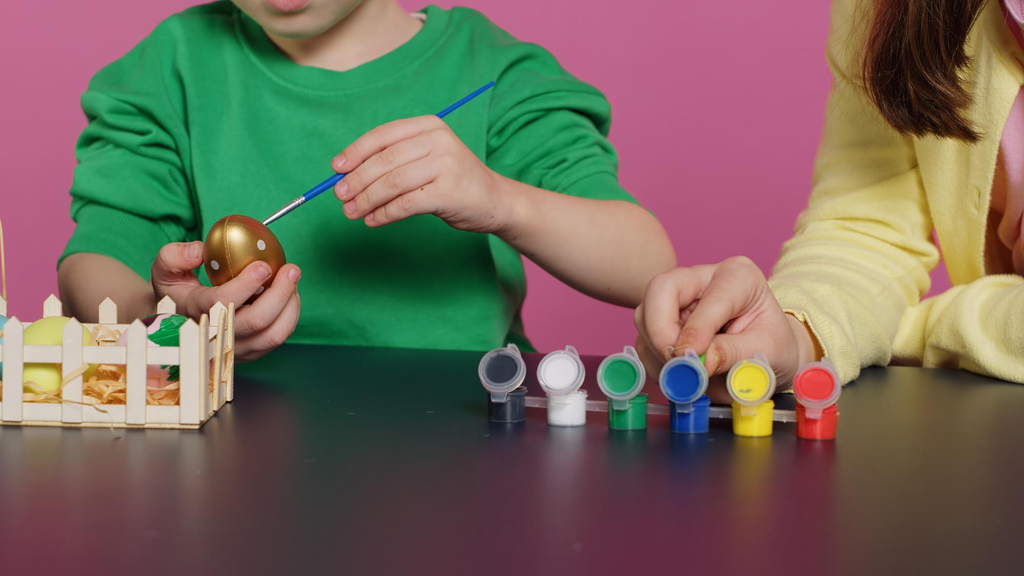
These two skill sets are not separate tracks running in parallel. They are deeply connected. A child needs strong core and back muscles, a gross motor skill, just to sit steadily at a desk long enough for fine motor tasks like handwriting to develop properly. This is exactly why a well-rounded preschool day always makes room for both, not just table-based activities.
Signs Your Toddler Could Use More Motor-Skill Practice
Most motor-skill gaps show up as small, specific patterns rather than a vague sense that something feels off.
Fine Motor Signs to Watch For:
- Avoiding drawing, coloring, or puzzle activities
- Struggling to grip a spoon, crayon, or button independently
- Tiring quickly during hands-on tasks
Gross Motor Signs to Watch For:
- Avoiding climbing, running, or playground equipment that peers enjoy
- Seeming unsteady on stairs or uneven ground
- Fatiguing faster than peers during active play
None of this is cause for alarm on its own. Uneven development between children the same age is common, and it typically resolves with consistent, low-pressure practice rather than correction or comparison. For families gearing up for a child’s first formal classroom experience, it helps to pair this motor-skill awareness with a broader look at what actually prepares a toddler for preschool, since readiness involves far more than just physical skill.
Fine Motor Skills Activities Preschool Kids Actually Enjoy, by Age
Fine motor activities should get more precise, not just more difficult, as a child moves from Playgroup toward Senior KG. A two-year-old and a five-year-old are not doing harder versions of the same task, they are working on entirely different levels of hand control.
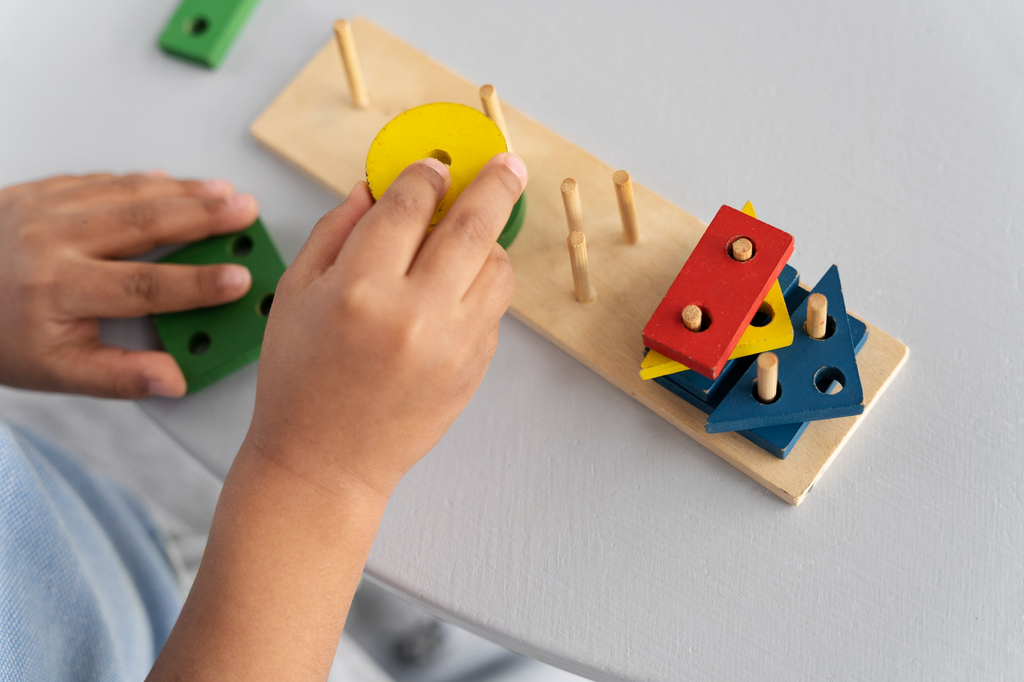
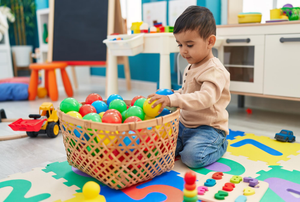
- Ages 2-3 (Playgroup): Peeling stickers off a sheet and placing them on a surface, rolling and squeezing playdough into simple shapes, ripping paper into small pieces for a mosaic craft, and popping bubbles one at a time all build early pincer grasp and hand strength without demanding much precision yet.
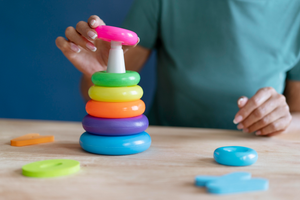
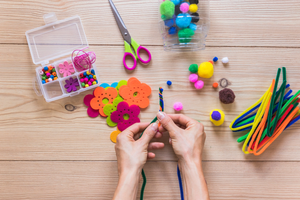
- Ages 3-4 (Nursery): Threading large beads onto string, sorting coins or buttons by size and color, opening and closing clothespins, and making first attempts at child-safe scissors along a straight line all push hand-eye coordination and bilateral hand use a step further.
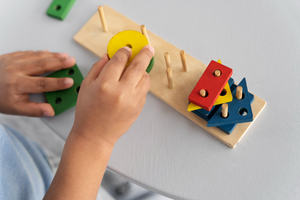
- Ages 4-6 (Jr/Sr KG): Threading progressively smaller beads, cutting carefully along a curved line, tracing mazes with a finger or pencil, folding simple origami shapes, and placing pegs into a pegboard pattern all sharpen the precision grip that formal handwriting will soon depend on.
Gross Motor Preschool Activities, Indoor and Outdoor
Gross motor development needs daily movement, but which activity works best often comes down to available space and weather rather than age alone.
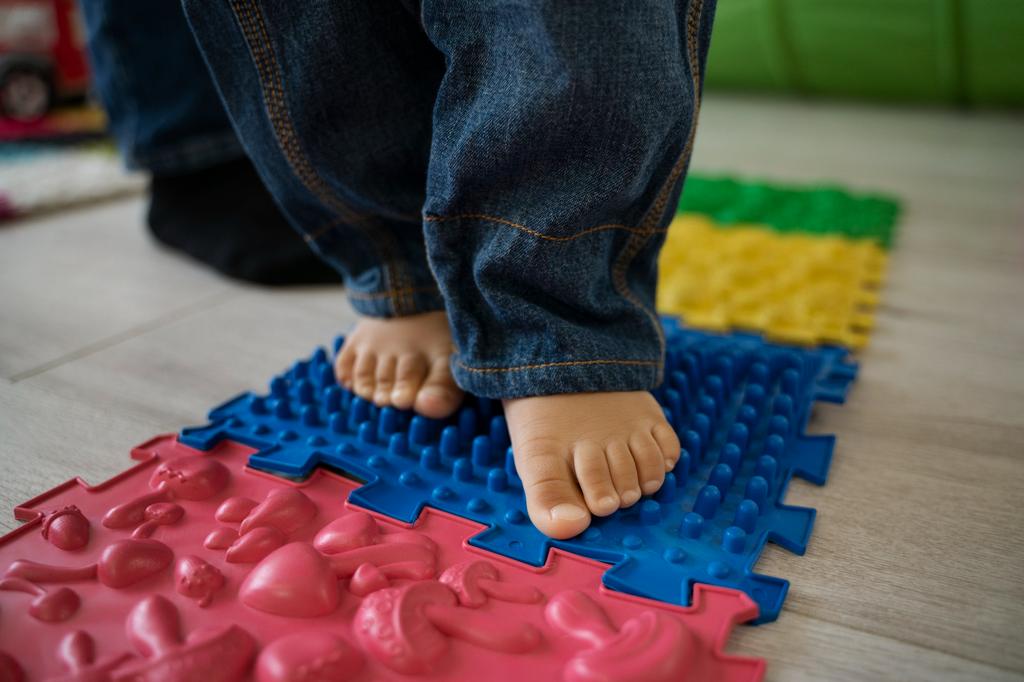
- Outdoor Gross Motor Activities: Animal walks like crab-walking or duck-waddling engage core muscles while making movement genuinely fun. Simple obstacle courses built from playground equipment, ball games that practice throwing and catching, tricycle or scooter riding for balance and leg strength, and chalk hopscotch for jumping and landing control all work well with open outdoor space.
- Indoor Gross Motor Activities: Freeze dance builds both coordination and listening skills. A homemade obstacle course using cushions and chairs turns a living room into a crawling, climbing, balancing challenge. Balloon toss practices catching without the risk of a hard ball indoors, and a round of “the floor is lava” turns basic balance practice into an imaginative game.
- Indoor Picks for Jaipur’s Hot Summer Months Jaipur’s peak summer heat makes extended outdoor play genuinely risky by late morning, so shifting active play indoors between April and June protects both energy levels and safety. Freeze dance, an indoor obstacle course, balloon toss, hula hooping in a cleared space, and tightrope walking along a taped line on the floor all deliver the same gross motor benefits without stepping outside during the hottest hours.
A Simple Weekly Motor-Skills Activity Planner
Rotating fine and gross motor activities across a week, rather than repeating the same one daily, builds a broader skill base without overwhelming a young child or turning practice into a chore.
A Sample Week of Motor-Skills Practice
| Day | Fine Motor Focus | Gross Motor Focus |
| Monday | Playdough rolling and pinching | Animal walks |
| Tuesday | Sticker peeling onto a target | Chalk hopscotch |
| Wednesday | Beading and lacing | Homemade obstacle course |
| Thursday | Cutting on a line (age-appropriate) | Ball throwing and catching |
| Friday | Origami or paper folding | Freeze dance |
Fifteen to twenty minutes of fine motor practice and roughly forty-five minutes of active gross motor play across a day is a reasonable target, though it rarely needs to happen in one continuous block. Short bursts spread through the day tend to hold a preschooler’s attention far better than one long session.
How Welmont’s Curriculum Builds Motor Skills Daily
Inside a Welmont classroom, fine and gross motor practice are never treated as a single separate “PE” slot bolted onto the day. They are woven directly into the Monthly Virtuous Circle, the school’s rotating, theme-based approach to learning, so movement and hand-skill practice reinforce whatever else the month is focused on.
During an “Under the Sea” themed week, for example, children might spend outdoor time on a crab-walk obstacle course, tying directly into the week’s animal theme, and then move indoors for a beading activity making ocean-colored bracelets. The gross motor challenge and the fine motor task are never disconnected from each other, or from the story being told that week.
This rotation also reflects the school’s Happiness Quotient philosophy. Movement that feels like a game, an obstacle course dressed up as an ocean rescue mission, or threading beads to “build” a coral reef, builds motor skills far faster than repetitive, drilled practice ever could. A child fully absorbed in the game rarely notices the skill-building happening underneath it, and that is exactly the point.
Small, Consistent Practice Wins
None of this calls for a structured therapy program or a shelf full of specialized equipment. A crayon fisted too tightly and a hesitant step down two stairs are simply signals that a skill needs a bit more repetition, not a reason to worry. Fifteen minutes of playdough rolling here, a crab-walk obstacle course there, repeated a few times a week, adds up faster than most parents expect.
For families who would rather see this rotation built into a full school day than manage it alone at home, a visit tends to make it click faster than any list can. Booking a school tour at Welmont Preschool & Daycare offers a firsthand look at how fine and gross motor practice are woven into the Monthly Virtuous Circle, and a chance to see exactly which activities would suit a specific child right now.
Give Every Skill Room to Grow. Visit Welmont School to see how fine and gross motor skills are naturally built into everyday learning. Book a school tour today!
Frequently Asked Questions
1. What is the difference between fine motor and gross motor skills?
Fine motor skills use the small muscles of the hands and fingers for tasks like writing and buttoning, while gross motor skills use the large muscles of the arms, legs, and core for tasks like running, jumping, and climbing. Both develop together and support each other.
2. What are the best fine motor skills activities for preschoolers?
Playdough manipulation, sticker peeling, bead threading, and cutting with child-safe scissors are among the most effective fine motor activities, since each one targets pincer grasp, hand strength, and finger control through repeated, low-pressure practice.
3. How much daily active play does a preschooler need for gross motor development? Most preschoolers benefit from around 45 to 60 minutes of active gross motor play daily, ideally spread across shorter bursts rather than one long session, to match a young child’s natural attention span and energy patterns.
4. What are signs a toddler needs more motor-skill practice?
Common signs include avoiding drawing or puzzle activities, struggling to grip everyday objects like a spoon or crayon, seeming unsteady on stairs, or tiring quickly during active play compared to same-age peers.
5. Can fine and gross motor activities be combined in one session?
Yes, and it often works better that way. Pairing an outdoor obstacle course with an indoor beading or lacing activity, for instance, keeps a child engaged across both skill types without the practice ever feeling repetitive.